

VIRTUAL MARKETPLACES: CHINA
Virtual Flash Sale, Shanghai Chic, Rumble in the Jumble Beijing… There’s a new sheriff in retail town and his name is WeChat Virtual.
In the past decade, China has witnessed a transition from the traditional brick-and-mortar and market shopping experience to watching live-streamers take one million RMB in sales in one hour. As Taobao (a platform dealing in everything including clothes), Meituan (food delivery), and their digital peers took over the nation’s online sales infrastructure, Chinese consumer preferences nowadays veer towards having most of their (daily) products delivered.
With this in mind and the onslaught Covid-19, a handful of Shanghai-based brand operators came up with the idea of an online marketplace that would help their fellow designers clear out some stock. Unsurprisingly, their platform of choice was the ever-popular WeChat (微信 in Chinese), a multi-purpose messaging, social media and mobile payment app developed by Tencent. In China, most people only communicate through WeChat when messaging, making calls, or organizing groups: when you meet someone, you ask them for their WeChat.
However, the app is proving useful to international companies, too.You do not need to be in China to use WeChat. If you don’t read Chinese, you can get the international version.
Brands can use WeChat to build a community and gain loyal customers by releasing consistent useful or inspiring content via an official brand account or affiliated WeChat groups. Unlike on Taobao, on WeChat brands are able to track touchpoints and other data, and in many cases it’s significantly cheaper.
The WeChat Virtual Experience
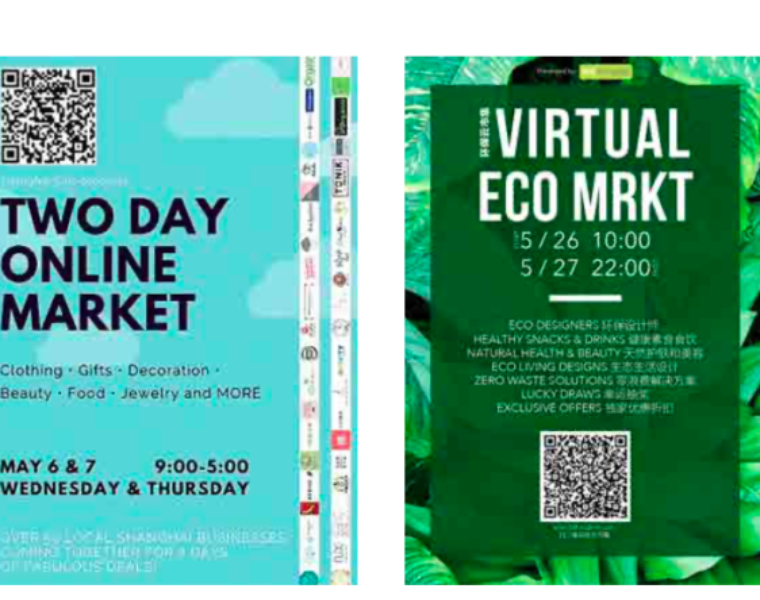
Designer, Creative Director and Virtual Market Instigator Miranda Mullett tells WeAr: “In late April, we launched our first digital sample sale on WeChat. Together with 11 other designers, we were able to connect a network of over 700 people across two WeChat groups –– WeChat groups feature a maximum of 500 contacts per group. Each designer was given a one-hour timeslot to briefly introduce themselves and their brand and share their product information.” Interested parties could then proceed by connecting with the designer directly or scan their official account QR code for more. A Virtual Market was born.
Jewelry designer Fernanda Sung was part of this first virtual experience and has since participated in two more such WeChat markets. “All the participating designers made a big effort to advertise [across their networks], and we ended up with a big following,” she says.
To Market, To Market, YOU Go!
Brands and vendors come together to create a group chat, preferably guided by the experienced hand of Mullet and her fellow visionaries. They then move onto inviting friends and customers into the group. Subsequently, everybody promotes the upcoming virtual market via their own WeChat channels to increase traction even further. When the day finally arrives, each participating vendor gets a designated timeslot to sell their products, for example, by sharing up to 12 photos and/ or videos.
Though the markets may officially run from 9AM until 6PM, the brands keep taking requests until midnight. Product photos stay on the group chat, so pretty much everyone in that chat eventually will get to scroll through all brands involved.
What’s the price? Nawt. Nada. Niente. Participating vendors do not need to pay any “entrance” fee, but they are kindly requested to add people to groups, essentially crowdsourcing a sales channel for everybody to share. Thus, the two-day Shanghai Chic Market (May 5-6) which saw a total of 48 vendors and 452 of their “closest contacts” participate in sales.
Past, Present and Future?
The invention of Virtual WeChat Markets has tested to be enormously successful. Brands reach 1000 to 2000 new customers, and customers are introduced to ten or twenty new brands. The discounts on offer – valid on market day only – definitely help drive immediate sales.
As far as the future goes, the WeChat Virtual Market sales are slated for another chapter. Or two. Tapping into different themes, Mullet assures WeAr that the markets will become more differentiated and hone in on one theme at a time in the future, such as “Home”, “Accessories”, “Wellness” or, of course, “Fashion”.
Enter the Devil’s Advocate
Virtual WeChat Markets have been scoring off the charts, arguably because they are novel. Once the number of markets goes up, will they still be able to bring in enough fresh blood to continuously pique people’s interest or will they see their notifications muted altogether? With the brand/vendor waitlist currently at 400, our bets are on the former.
 PLEASE READ THESE TERMS AND CONDITIONS CAREFULLY