

CIFF Copenhagen wrapped its 67th edition this week on a restrained note. The show moved its dates forward this season, opening on a Monday and running through Wednesday. Despite a first morning rush, Monday already was slow.
One could blame the day of the week. WeAr asked several brands directly instead, and the answer kept coming back the same: the dates don’t match what the market needs right now.
A show built around a Scandinavian summer
CIFF has run in August for decades, timed around Scandinavia’s summer holiday, which in Denmark alone stretches across the whole of July. It used to be a mostly local show serving Scandinavian buyers, with the occasional international guest, often flown in from the US or Asia by the organisers themselves. Europeans showed up from time to time to buy, mostly to approach the big names: DK Company and Bestseller Group, the former with a permanent, sizeable presence at Bella Center.
When Premium Exhibition in Germany weakened and subsequently closed, the industry turned to CIFF to pick up the difference: exhibitors looking for a new home, and German buyers left without a womenswear show of their own to draw inspiration from. That’s what pushed CIFF’s importance up over the past few years.
The show itself hasn’t changed much in its format, whatever the current messaging suggests. Which raises the real question: is this enough to build an international lead, or does CIFF stay a Scandinavian show with few international guests?
Walking in through an empty pool
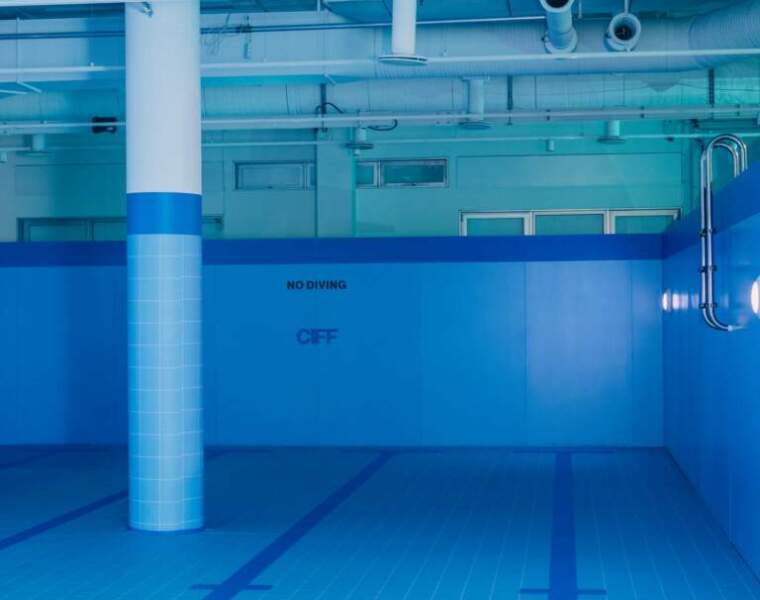
This edition greeted visitors with a public swimming pool, or something built to look like one. Showers and towels lined the entrance aisle, which ran through a replica pool, empty, with ladders reaching up to nothing. “Do not dive” signs everywhere.
Maybe it nodded to CIFF’s tie-up with Miami Swim Week, where resortwear brands showed, the segment itself seemed as empty as the pool at the entrance when visited. Pitti had already run with “pool” as its own summer theme, so maybe the two shows compared notes. Either way, some visitors expected an actual pool and were a little let down, chlorine smell aside.
It’s an odd opener for a show chasing a premium feel. It’s also, intentionally or not, a solid metaphor for what followed over the next two days: little traffic, and reaching for something out of grasp.
The overall traffic
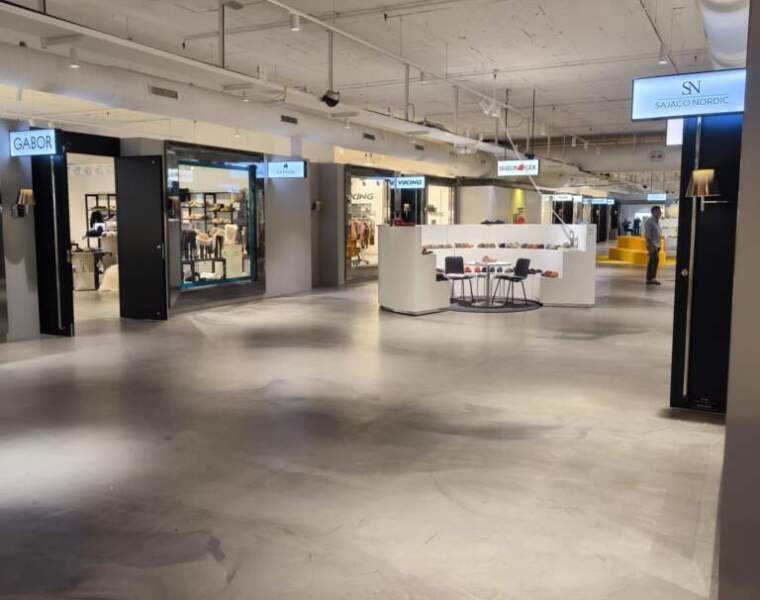
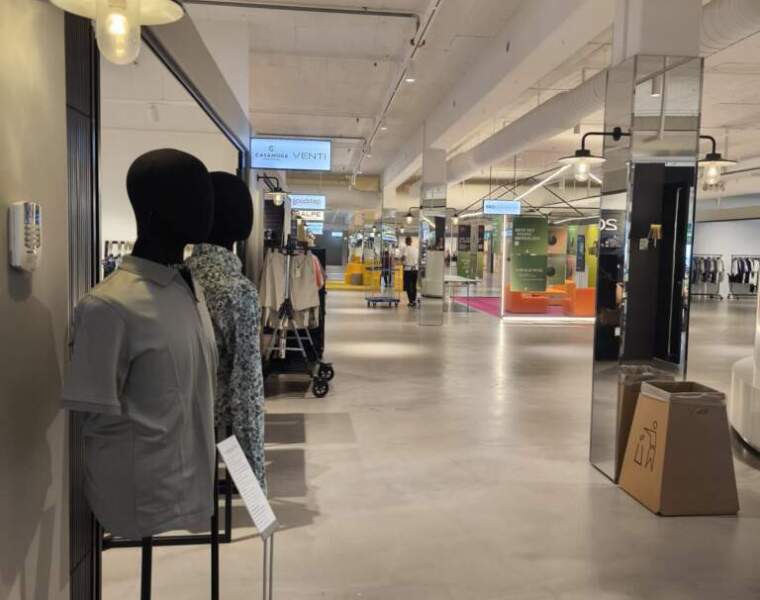
Traffic thinned fast after the first morning. Tuesday was slightly more but people were still hoping Wednesday morning for the big rush. Some German and Austrian buyers showed up, mostly smaller accounts and Scandinavian-style boutiques. A handful of Italians came too, trading Italy’s August heat for Nordic inspiration.
Some of that is just a big venue swallowing a normal crowd. But it wasn’t always this way.
A quieter village, and a curation gap
CIFF Village, usually fully booked, had empty stalls this time in prime location, a first. The small, sharply creative designers who used to fill the entrance halls, the ones editorial visitors and specialty buyers came looking for, were largely missing too. For a buyer hunting what’s next rather than what’s already proven, there wasn’t much to find this season.
Not everything fell flat. The show’s own events programme, talks and evening gatherings among them, still pulled a crowd even as the floor traffic thinned.
Support versus leadership
Show leadership pointed to last season’s collaboration with 10 Corso Como, which wasn’t repeated this season, as proof CIFF can carry weight beyond Scandinavia. It’s also a retail collaboration in a familiar pattern: CIFF has run similar tie-ups before, with Harvey Nichols or Beams.
CIFF’s pop-up showrooms at Pitti Uomo and now in Paris are also hailed as saviours for the brand name. But given that they showcase a majority, if not only, Scandinavian brands, they feel more like a support programme helping Scandinavian brands get in front of other markets than a satellite extension of the show itself. Useful, worth having, but a different ambition than becoming Europe’s leading show.
Mandatory: a quiet floor, careful curation
A short distance away, Mandatory ran its own edition in Øksnehallen, the meatpacking-district hall it has called home since launching. The curation held up: creativity was visible across menswear, womenswear and accessories, and Swiss label Guapi stood out this season.
Traffic was slow here too. But Mandatory is building around something other than footfall. One of the organisers runs guided tours through the show for select buyers, and exhibitors get buyer lists in advance so they can invite the right people directly rather than hope they wander by.
The hospitality does real work here: meals and exhibitor events run throughout the days. It’s what brings exhibitors back season after season, because it changes the cost-to-return equation. Buyers from Austria, Italy and a few from Eastern Europe were on the floor, looking for brands they hadn’t seen before.
Mandatory’s own organisers are having the same date conversation. They’re discussing and evaluating an earlier slot, and would push for one if they could. But running outside CIFF’s dates isn’t really an option: international and Danish buyers alike won’t make two separate trips to Copenhagen in a calendar already packed with shows. For now, Mandatory’s date stays tied to CIFF’s.
The date question, again
Exhibitors keep raising the same point: move CIFF to early July. It would suit production schedules, and it would land inside the budget window for buyers like the Germans, who tend to close spending by late July and are lacking a big show, relying on order days and their showroom partners. Trade shows don’t drive order-writing the way they used to. Early contact still shapes how the rest of the supply chain plans its season.
WeAr asked show management directly. Their answer: they’re surveying the industry and will follow what the data says. So far, they said, the data doesn’t support a change.
That might be true, for Scandinavia. On that count, the show still performs. Buyers travel in from across the region, as far as Iceland, and UK companies, agents and distributors turn up as they always have. There was always a steady connection between the UK and the Scandinavian market. But keeping these dates limits what flows in from southern Europe and the German-speaking markets. If CIFF wants to become the pan-European show people keep asking for, the calendar it’s defending is the same one working against it.
Conclusion
For any brand looking to enter the Scandinavian market and buyers wanting to be in Scandinavia to buy there, CIFF and Mandatory are the shows to attend. Although showroom appointments, special events (even provided under the CIFF name during e.g. Paris) and trade press appearances are also valid options to get inspiration, contacts, and place orders. For international buyers, longer trips to the Asian destinations Tokyo, Seoul and Shanghai are the places to go to find truly distinct designers, or alternatively, the showrooms in Milan and Paris, even in June, to get a taste of womenswear. If it is menswear, the leader of the ring still is Pitti Uomo.
 PLEASE READ THESE TERMS AND CONDITIONS CAREFULLY